
EU/UK Cosmetic Compliance: A Comprehensive Guide
This guide outlines essential requirements for placing cosmetic products on the EU and UK markets under Regulation (EC) No 1223/2009 and the UK Schedule 34 to the Product Safety and Metrology etc. (Amendment etc.) (EU Exit) Regulations 2019.
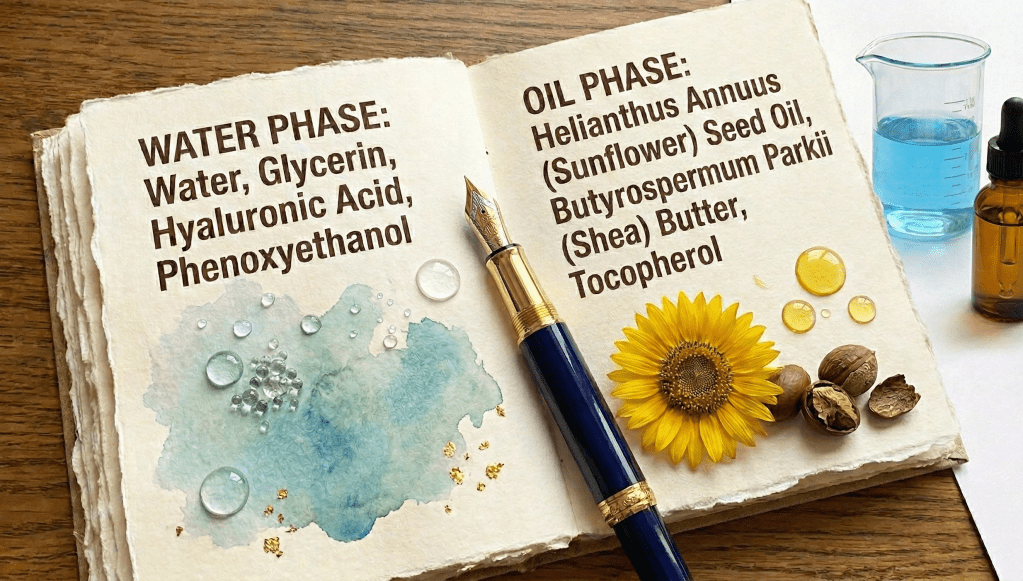
Cosmetic product classification and formula compliance
Cosmetic product classification
A cosmetic product in Europe and UK is defined as follows:
‘cosmetic product’ means any substance or mixture intended to be placed in contact with the external parts of the human body (epidermis, hair system, nails, lips and external genital organs) or with the teeth and the mucous membranes of the oral cavity with a view exclusively or mainly to cleaning them, perfuming them, changing their appearance, protecting them, keeping them in good condition or correcting body odours. (EU Regulation 1223/2009, Article 2.1.a)
Several things we need to look at in the definition, for example, product must be a “substance” or a “mixture” to be classified as a cosmetic. Because of this, items like nail wraps or false eyelashes are not considered cosmetics. Even though they are applied on the body to change appearance, they are viewed as finished articles rather than cosmetics.
Cosmetic product application site is also important. The product must be intended to be placed in contact with the external parts of the human body (epidermis, hair system, nails, lips and external genital organs). Consequently, any product designed to be swallowed, inhaled, injected, or surgically implanted does not qualify as a cosmetic in the EU or the UK.
The purpose of the product must be exclusively or mainly to clean, perfume, change appearance, protect, keep in good condition, correct body odours. How you market your product often dictates its legal category. This is particularly relevant for “borderline products,” which share traits with more than one product category, and it is therefore difficult to classify.
To stay within the cosmetic category, cosmetic product cannot be marketed as treatment or preventative for diseases. Because of this, it is not allowed to mention diseases, showing medical imagery, or using language that implies a medicinal purpose on packaging or labels. Determining if a product qualifies as a cosmetic requires a comprehensive, case-by-case evaluation. This assessment takes into account all specific characteristics of the product.
formula compliance
Evaluating the cosmetic product composition is just as critical as determining the correct product classification. Cosmetic products must exclude all prohibited substances listed in Annex II and strictly adhere to the restrictions defined in Annex III. Additionally, they must comply with the specific regulatory requirements for colorants (Annex IV), preservatives (Annex V), and UV filters (Annex VI).

Product information file (PIF)
What Is Product Information File (PIF)?
The Product Information File (PIF) is a cosmetic product dossier containing information about the cosmetic product itself, raw materials, packaging in which the product is sold, manufacturing process and other important information about the product.
“When a cosmetic product is placed on the market, the responsible person shall keep a product information file for it. The product information file shall be kept for a period of ten years following the date on which the last batch of the cosmetic product was placed on the market.” (EU Regulation 1223/2009, Article 11.1).
The Responsible Person must keep the Product Information File (PIF) accessible in electronic or other format at address indicated on the label to the competent authority of the Member State in which the file is kept.
The PIF should be updated regularly, for example, if raw material supplier is changed or new testing data is available, the PIF should be updated. If the changes to the product are significant from the product of the same name previously placed on the market, an update might not be sufficient and creating a new PIF might be needed.

Cosmetic Product Safety report (CPSR)
What Is Cosmetic product safety report (CPSR)?
The Cosmetic Product Safety Report (CPSR) forms the core and most comprehensive section of the cosmetics Product Information File (PIF). It contains information on all critical details, specifications, and testing data on raw materials, the finished product, packaging, etc. The CPSR confirms that a cosmetic product is safe for use as intended under normal or reasonably foreseeable conditions.
The cosmetic product safety report should, as a minimum, contain the following:
PART A – Cosmetic product safety information
- Quantitative and qualitative composition of the cosmetic product
- Physical/chemical characteristics and stability of the cosmetic product
- Microbiological quality
- Impurities, traces, information about the packaging material
- Normal and reasonably foreseeable use
- Exposure to the cosmetic product
- Exposure to the substances
- Toxicological profile of the substances
- Undesirable effects and serious undesirable effects
- Information on the cosmetic product
Part B: Cosmetic product safety assessment
- Assessment conclusion
- Labelled warnings and instructions for use
- Reasoning
- Assessor’s credentials and approval of part B
Why You Need a CPSR?
First, it’s a legal requirement under EU Regulation 1223/2009 (Annex I) and the UK Schedule 34 to the Product Safety and Metrology etc. (Amendment etc.) (EU Exit) Regulations 2019. Without this expert-signed document in your Product Information File (PIF), your cosmetic product cannot legally be placed on the EU/UK market. And most important, Cosmetic Product Safety Report assures safety through a rigorous evaluation that reviews every aspect of the product.
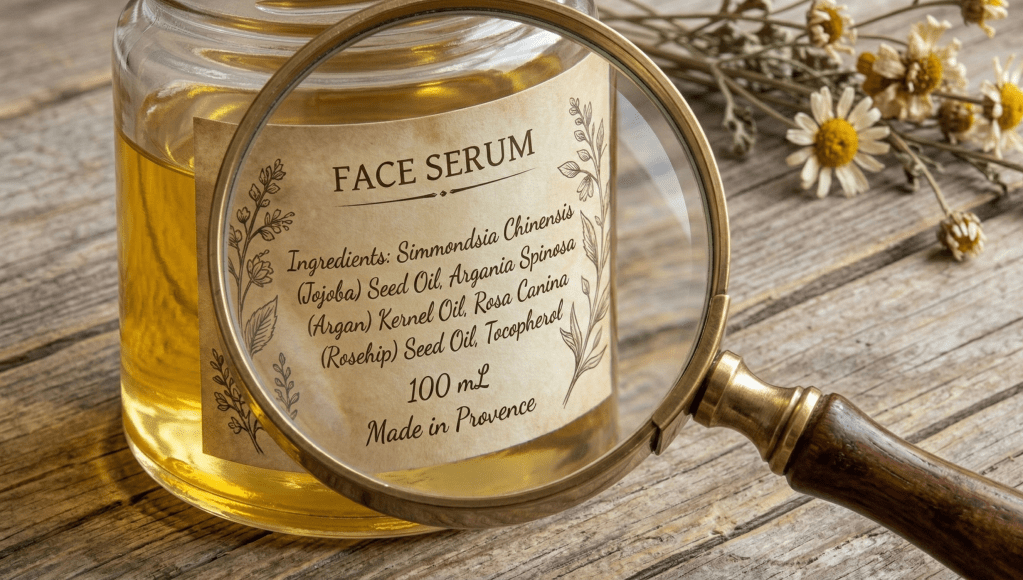
Labelling review
The regulations outline specific cosmetic labeling requirements which must be followed. For EU market – EU Regulation 1223/2009, Article 19 and for UK market – Schedule 34 of the Product Safety and Metrology etc. (Amendment etc.) (EU Exit) Regulations 2019). These rules detail exactly what information needs to appear on the packaging to ensure compliance.
The following information must be provided on the primary packaging (tube, bottle, jar, etc.) and secondary packaging (usually cardboard box):
- The name and address of the responsible person
- Nominal content of the product at the time of packaging, given by weight or volume
- Date of minimum durability or period after opening
- Particular precautions to be observed in use
- Batch number of manufacture or the reference for identifying the cosmetic product
- Function of the cosmetic product, unless it’s clear from its presentation
- List of ingredients (may be indicated on the secondary packaging alone)
- The country of origin if the product is imported from countries outside of the EU/UK
It should be noted that certain information on the labels needs to be translated into different languages (shall be determined by the law of the Member States in which the product is made available to the end user), and some countries have more than one official language.
Cosmetic product claims
“In the labelling, making available on the market and advertising of cosmetic products, text, names, trade marks, pictures and figurative or other signs shall not be used to imply that these products have characteristics or functions which they do not have” (EU Regulation 1223/2009, Article 20)
Every claim on cosmetic product label, but also in TV commercials, ads, websites, etc. must be substantiated. Responsible person needs to make sure that all the claims made regarding the product are proven.
The EU published a separate regulation (Regulation 655/2013) along with a guideline (Technical Document on Cosmetic Claims) to allow the correct interpretation of the Regulation previously introduced. Technical Document on Cosmetic Claims also provides guidance on the use of “free from claims” and hypoallergenic claims. See Regulation 655/2013 for more information regarding the justification of cosmetic product claims.
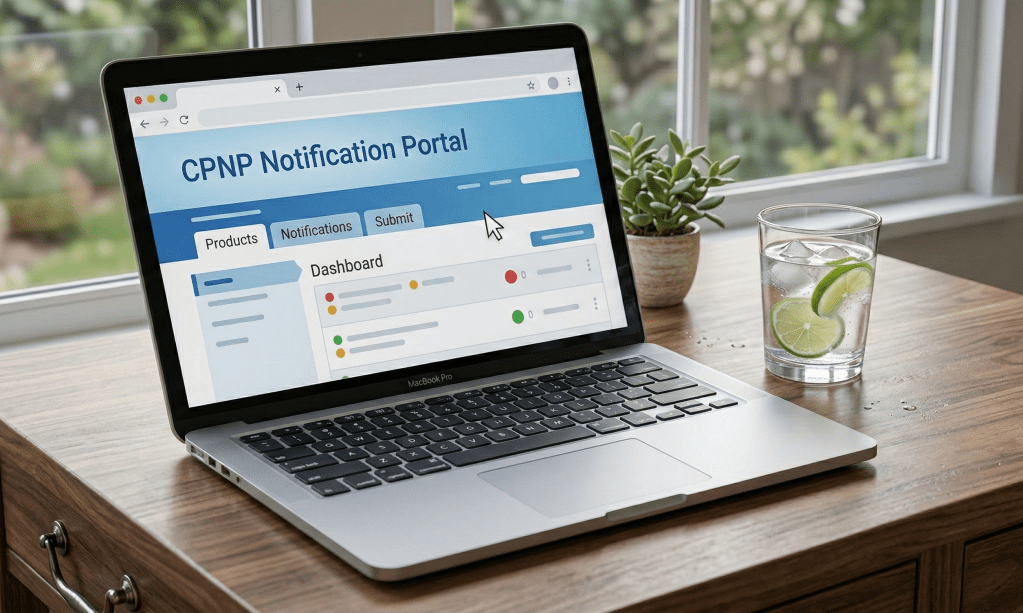
CPNP and SCPN notification
What Is CPNP and SCPN Notification?
CPNP is a free EU system where the Responsible Person (RP) uploads key product details before market entry. This includes the product name, category, full ingredient list, contact details, product images and labelling, information on nanomaterials, and other required information.
SCPN is the free online system from the UK Office for Product Safety and Standards (OPSS) where the UK Responsible Person submits product details before placing cosmetics on the market. Similarly to CPNP portal, you will need to upload info like the product name, ingredients, labeling/packaging images, Responsible Person contacts and other required information. It issues a unique notification number for tracking.
Why Do You Need It?
It’s legally required under EU Regulation 1223/2009 and the UK Schedule 34 to the Product Safety and Metrology etc. (Amendment etc.) (EU Exit) Regulations 2019 for market surveillance, market analysis, evaluation and quick access for authorities like poison centers during emergencies. Notification is not registration – it is one-sided and doesn’t mean any official approval for sales.
How It Fits Your Launch
Once your Product Information File (PIF) and Safety Report( CPSR) are ready, you can use existing EU Login Account (or SCPN account) or create new one and submit required information. You will get a notification number that you can share if requested. You can also update notification anytime if there are any changes, for example in formula or labels.
The main information that needs to be submitted prior to placing the cosmetic product on the EU market (more information available here):
- The category of cosmetic product, its physical form, packaging type and its name
- The name and address of the Responsible Person
- The country of origin in case of import
- The member state in which the cosmetic product is to be placed on the market
- The presence of substances in the form of nanomaterials
- The name and CAS or EC number of substances classified as carcinogenic, mutagenic or toxic for reproduction (CMR), of category 1A or 1B
- The product formula (ingredient concentration ranges are allowed)
- The original labelling, and a photograph of the corresponding packaging (where reasonably legible)
For the UK the information that needs to be submitted via the SCPN is very similar.

EU/UK responsible person
Who can be a cosmetics responsible person?
In the EU and UK, Responsible Person (RP) is a natural person or legal entity established within the respective region, ensuring product safety and regulatory compliance. The Responsible Person can therefore be any EU/UK based:
- Manufacturer of cosmetic products
- Importer
- Distributor
- Any person established in EU/UK by written agreement
Only one RP per product covers the entire EU market; their name and address must appear on labels.
What are the obligations of the Responsible Person?
The Responsible Person is in charge of ensuring compliance of the cosmetic product with EU regulation 1223/2009 and its amendments or UK Schedule 34 to the Product Safety and Metrology etc. (Amendment etc.) (EU Exit) Regulations 2019 before they are placed on the EU/UK market, and make sure that the products remain compliant with the Regulation while they are on the market.
Core obligations are:
- Registered address in the EU/UK where the Product Information File (PIF) is kept readily accessible to the local competent authority
- Compile and retain the Product Information File (PIF) for 10 years after the last batch of the product has been placed on the market and ensure its compliance with the EU/UK cosmetic regulation
- Correct cosmetic product labelling
- Product claims substantiation
- Notification of cosmetic products via CPNP (EU) or SCPN (UK) portals
- Communication of any undesirable or serious undesirable effects to the competent authorities
- In case of any non-conformity with the EU/UK cosmetic regulation, take appropriate measures to make cosmetic product compliant (recall, removal of the products or taking corrective action)
cosmetic product Testing
Cosmetic product testing is a fundamental requirement to ensure the safety, stability, and efficacy of cosmetic formulations prior to market placement. These tests provide scientific evidence that the product is safe for use under normal or reasonably foreseeable conditions and that it performs as intended.
The most common cosmetic product tests
- Stability test ensures that a cosmetic product maintains its quality, consistency, and safety throughout its intended shelf life under various storage conditions. Based on the test results the shelf life and expiry date of the cosmetic product is determined. It is required for all cosmetic products.
- Compatibility test (Packaging Interaction Test) verifies that the product formulation does not react with its packaging (migration or degradation does not happen). It is required for all cosmetic products.
- Challenge test (PET/Preservative Efficacy Test) confirms that the product can resist microbial contamination during storage and use. It is required for water-based and emulsified products (creams, lotions, gels, etc.).
- Patch test (Dermatological Test / Skin Irritation Test) ensures that the product does not cause skin irritation or allergic reactions under normal use. During the test, the skin’s response is evaluated either on human volunteers or using reconstructed human epidermis models.
- SPF/UVA test measures how effectively a sunscreen or cosmetic with UV filters protects against UV radiation. During the test, SPF level (UVB protection), UVA protection factor, and water resistance values are determined. It is required for sunscreens and any cosmetic product with SPF claims.
- Efficacy and Claim Support tests validates the performance claims on your product label. For example, if the packaging claims “Moisturises for 24 hours,” a hydration test is required to substantiate the claim. Similarly, for a “Brightening” claim, a skin tone analysis test would be needed. It is needed for any product making measurable performance or functional claims.
 Your Trusted Expert in Cosmetic Product Compliance